

As we ramp up our growth to support innovators in the city region, LYVA Labs has been busy...
For many students, breaking into bioscience careers can feel out of reach with limited levels of placements, professional exposure and increasingly competitive opportunities. Officially launched on 8th June and open to all final year biosciences students within their curriculum, the LYVA Labs virtual work-based experience comes at an important moment. Alan Milburn’s latest interim report on young people and work warns that opportunities for young people are not growing but shrinking, with more than one million now not in education, employment or training, while a wider graduate career opportunity gap continues to limit access to the first rung of the ladder. Against that backdrop, giving students meaningful exposure to how careers develop beyond university is not a nice-to-have; it is essential.
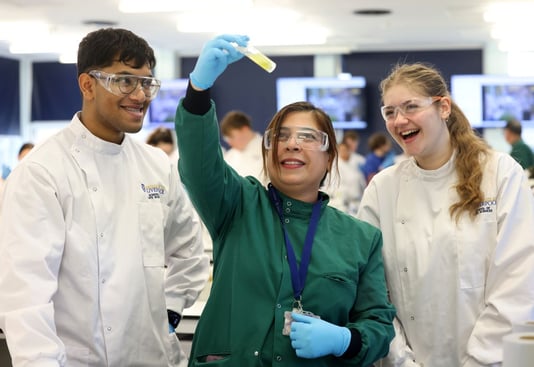 The experience is designed to make those opportunities visible and real. Students step into the role of a LYVA Labs Innovation Consultant, working on a brief centred on an early-stage biotech company. Their challenge is to help shape a commercial strategy for the company’s technology, moving beyond scientific theory to explore how innovation reaches the market. In doing so, they build practical understanding of commercialisation: developing value propositions, understanding routes to market, and what makes a scientific idea commercially viable. It gives bioscience students a clearer view of how their knowledge can be applied in professional settings that sit at the intersection of science and enterprise.
Just as importantly, the programme introduces students to the entrepreneurial side of bioscience careers. By working through the challenges an early-stage biotech faces, students build their understanding of how innovation is shaped by evidence, market insight and strategic choices. Fundraising is part of that picture too, showing why scientific promise alone is not enough; new technologies also need a compelling case for investment and funding. Delivered virtually, the experience opens up access at scale, allowing more students to benefit from meaningful, industry-led learning in a format that is flexible, engaging and closely linked to employability.
For the University of Liverpool, the collaboration with LYVA Labs provides a practical way to deliver tangible work experience at scale. It helps bioscience students translate academic learning into commercial and professional contexts, build confidence in their career direction and open up wider opportunities across startups, scaleups, translational research and the broader innovation economy. It also strengthens talent connections between students and regional businesses, creating the kind of relationships that can support future placements and graduate opportunities. Together, the two organisations are showing how targeted, well-designed work experience can benefit students while also supporting the region’s long-term talent retention and innovation ambitions.

 Central Tech, 31 Russell St, Liverpool, L3 5LJ
 enquiries@lyvalabs.com
  LinkedIn